
Published by HashCraft USA Editorial Team · January 2026 · 10 min read
Of all the hashish traditions in the world, none carries more weight in cannabis culture than Afghani hash. The name alone conjures images of mountain passes, hand-rubbed resin, and centuries of trade along the Silk Road. For cannabis enthusiasts who have sought the deep, earthy, unmistakably potent character of traditional Afghan hashish, it occupies a special place — something both ancient and essential.
In the modern American legal cannabis market, Afghani-style hashish has undergone a remarkable transformation. Craft producers using premium American-grown indica genetics have developed Afghani-inspired hash products that honor the traditional character while meeting the quality standards of the legal, lab-tested market. The result is something that would be recognizable to a traditional hash maker in the Hindu Kush — but made with precision that surpasses anything produced under traditional conditions.
This is the complete guide to Afghani hash: its history, how it’s made, what it smells and tastes like, its effects, and where to find authentic Afghani-style hash in the USA.
On sale products

High THC Afghani Hashish Near Me
Price range: $80.00 through $500.00High THC Rosin Hash For Sale
Price range: $125.00 through $750.00Pure High THC Moroccan Hashish
Price range: $110.00 through $600.00Solventless High THC Live Hash Rosin
Price range: $100.00 through $1,000.00THC Premium Bubble Hash Near Me
Price range: $70.00 through $660.00
The History of Afghani Hash
Afghanistan has produced cannabis and hashish for at least a thousand years. The Hindu Kush mountain range — stretching across northeastern Afghanistan and northwestern Pakistan — is one of the original native habitats of Cannabis indica, and the region has been associated with hashish production since at least the medieval period.
The Silk Road — the ancient network of trade routes connecting China with the Mediterranean — passed through Afghanistan, and hashish was among the goods traded along these routes. By the 13th and 14th centuries, hashish consumption was documented across the Islamic world, and Afghan hashish was already known as among the finest.
The particular quality of Afghan hash comes from the cultivars — landrace indica strains that evolved over thousands of years in the harsh conditions of the Hindu Kush. These plants developed dense resin production as a natural adaptation, likely to protect themselves from UV radiation at high altitude. The result is some of the most resinous cannabis ever cultivated, producing rich, dark, heavily aromatic resin.
Traditional production methods in Afghanistan vary by region but typically involve:
- Hand rubbing (charas): Resin is collected by rubbing the living plant between the palms, collecting the sticky trichomes as a dark, malleable ball.
- Dry sieving: Dried, harvested plants are beaten over fine silk or cotton cloth, collecting the sifted resin.
- Pressing: The collected resin is kneaded, sometimes with the addition of a small amount of water or tea, and then pressed into slabs, balls, or fingers using hand pressure and sometimes heated tools.
In the 1960s and 1970s, Afghanistan became famous among Western travelers along the “Hippie Trail” — a legendary route from Europe through Turkey, Iran, Afghanistan, Pakistan, and India. The hash of Mazar-i-Sharif, Kandahar, and the Panjshir Valley became legendary. Stories of “black Afghani” — dense, almost tar-black hash of extraordinary potency — circulated widely.
Decades of conflict disrupted traditional hashish culture in Afghanistan, but the genetics survived. Afghan cannabis landrace varieties spread around the world, forming the backbone of virtually every modern indica cultivar available today. When you smoke any indica strain — OG Kush, Granddaddy Purple, Northern Lights — you are consuming the genetic descendants of those ancient Hindu Kush plants.
What Does Afghani Hash Look Like?
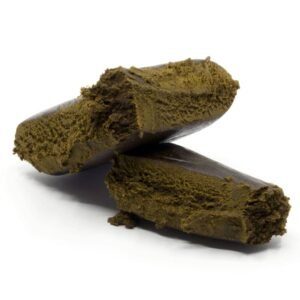
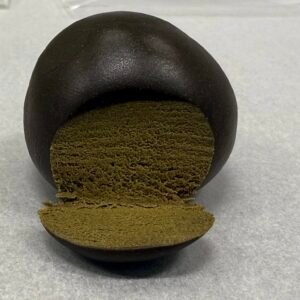
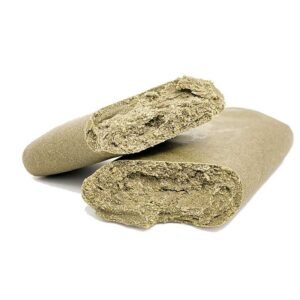
Traditional Afghani hash has a distinctive appearance that differs from modern solventless concentrates. The exterior is typically very dark — brown to black — almost burnt-looking. The interior, when cut or broken, reveals a lighter, more olive-brown or greenish-brown color. This color contrast is characteristic and comes from the oxidation of the outer layer during pressing and curing.
The texture varies by production method and age. Fresh Afghani hash is malleable and slightly sticky when warmed in the hand. Older or more heavily pressed hash can be quite hard at room temperature. When warmed slightly, it becomes pliable and will bend rather than crumble.
High-quality traditional Afghani hash has a glossy, slightly shiny surface and a density that speaks to the compression of large amounts of resin. Low-quality material will look dusty, crumble inconsistently, and lack the waxy sheen of good product.
Modern American-produced Afghani-style hash, made using cold-press techniques and premium indica genetics, often looks somewhat different from traditional imports. Colors may be lighter (golden-brown to dark amber), textures may be more uniform, and the material is typically cleaner and more consistent.
The Aroma and Flavor Profile of Afghani Hash
The aroma of authentic Afghani hash is one of the most distinctive and recognizable in all of cannabis. Descriptions vary but consistently include:
- Earth and soil: A deep, rich earthiness unlike lighter cannabis strains
- Spice: Notes of black pepper, clove, and incense — attributed to high levels of beta-caryophyllene terpene
- Wood and bark: Cedar, sandalwood, or old wood notes
- Sweetness: An underlying sweetness that becomes more apparent with high-quality material — sometimes almost chocolatey
- Musk: A slightly animal, musky quality that gives Afghan hash a unique depth
The dominant terpenes in Afghan indica genetics — myrcene, beta-caryophyllene, humulene, and terpinolene — create this characteristic aromatic profile. These same terpenes are responsible for much of Afghan hash’s distinctive physiological effects.
When smoked or vaped at appropriate temperatures, the flavor follows the aroma: earthy, spicy, slightly sweet, with a distinctive warmth at the back of the throat that experienced hash smokers recognize immediately.
The Effects of Afghani Hash: What to Expect
Afghani hash is definitively in the indica category, and its effects reflect that deeply. Common reported effects include:
Physical Effects
- Heavy, warm body sensation — often described as “melting” or sinking into furniture
- Muscle relaxation and tension release
- Pain relief — particularly effective for chronic, deep-tissue discomfort
- Reduction in physical restlessness
- Increasing heaviness in limbs as effects progress
Mental Effects
- Initial mild euphoria or mood elevation
- Quieting of racing or anxious thoughts
- Dreamy, contemplative mental state
- Reduced cognitive sharpness (not ideal for tasks requiring focus)
- Progression toward sleepiness, particularly at higher doses
Afghani hash is firmly an evening or nighttime product. Using it during the day will typically result in significant fatigue and reduced productivity. Its sedative and analgesic qualities make it particularly valued by those seeking relief from insomnia, chronic pain, muscle spasms, or nighttime anxiety.
Duration and Intensity
Effects typically begin within 5–15 minutes when smoked and peak at 30–60 minutes. Total duration depends on dose and individual tolerance but typically runs 2–4 hours for smoked hash. The heaviest sedative effects usually arrive in the second hour.
Afghani Hash Potency: THC and Cannabinoid Content
Traditional Afghani hash, as produced in Afghanistan, typically runs 20–35% THC by modern testing standards — which is substantially more potent than most cannabis flower but less potent than modern American bubble hash or rosin.
Modern American-produced Afghani-style hash, made from cultivated high-THC indica genetics and using more efficient extraction methods, can test significantly higher — often 35–50% THC. This is still lower than bubble hash or rosin, but the fuller terpene profile and broad-spectrum cannabinoid content mean the experience is often described as more “complete” than a simple THC number suggests.
The presence of significant CBN (cannabinol) — which develops as THC ages and oxidizes — in traditional-style hash contributes to its distinctive sedative quality. CBN is believed to enhance the sedating properties of THC, which may explain why traditional hash often feels more powerfully sedating than its THC percentage alone would predict.
Afghani Hash vs Moroccan Hash: Key Differences
These are the two most iconic traditional hash styles, and they differ significantly:
Afghani hash is made from indica-dominant landrace genetics, is typically dark and dense, has an earthy-spicy aroma, and produces a heavy, sedating body effect.
Moroccan hash (from the Rif Mountains of northern Morocco) is typically made from hybrid genetics with more sativa influence, tends to be lighter in color (blonde to light brown), has a sweeter, more floral aroma, and produces a lighter, more balanced effect that is more functional during the day.
For sleep and pain management, Afghani is generally preferred. For social occasions, creativity, or daytime use, Moroccan-style hash is typically the better choice.
Afghani-Style Hash at HashCraft USA
HashCraft USA’s Afghani-style hash is produced using a blend of the finest American-grown pure indica cultivars selected for terpene richness and resin density. Our production team uses a cold-press technique that preserves the full terpene profile while achieving the dense, compact texture characteristic of traditional Afghani hash.
Every batch is lab-tested for potency, terpenes, pesticides, and microbials. The COA is available at any HashCraft location. Ask your budtender about current batch characteristics — terpene profiles vary with each harvest.
How to Consume Afghani Hash
Traditional methods work wonderfully for Afghani-style pressed hash:
- Small pipe (chillum or one-hitter): A classic, efficient method. Use a very small amount — a pea-sized piece burns for multiple sessions.
- Adding to a joint: Crumble a small amount and mix with flower.
- Hot knife method: A traditional technique involving two heated knife blades. Old-school but effective for pressed hash.
- Low-temp dab: Pressed hash can be dabbed at low temperatures for a clean vapor experience.
Conclusion
Afghani hash carries with it a thousand years of human history — trade routes, mountain harvests, ancient traditions of cultivation and craft. In the modern American legal market, it has been reborn with the quality controls, consistency, and transparency that legal cannabis demands. Whether you’re drawn to it for its legendary sedative effects, its iconic earthy aroma, or simply a connection to one of the oldest cannabis traditions in the world, Afghani-style hash from HashCraft USA delivers an experience unlike any other concentrate on the market.